
Everyone’s Searching for Weight-Loss Injections. Is Your Practice Part of That Conversation?
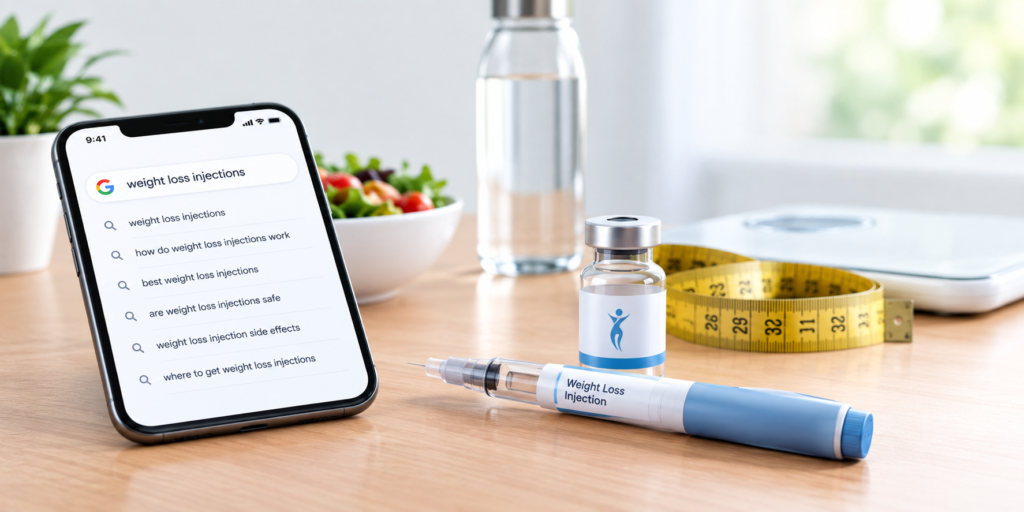
Everyone’s Searching for Weight-Loss Injections. Is Your Practice Part of That Conversation? Right now, “Ozempic,” “Mounjaro” and “weight loss injections” are some of the most searched health terms in Australia. GPs are fielding more questions about medically supervised weight management than almost any other topic. Dietitians, exercise physiologists and telehealth clinics are all reporting the same thing: patient demand tied to GLP-1 medications has genuinely reshaped what people are asking their healthcare providers for. For healthcare businesses, that’s not just a talking point. It’s a signal about where patients are searching, what they want explained, and which practices are showing up with real answers, versus which ones are staying quiet and missing the conversation entirely. Why this moment is different Weight-loss medication has been in the news for a few years now, but 2026 feels like a turning point. The Therapeutic Goods Administration tightened the rules around compounded weight-loss products back in late 2024 after safety concerns, TGA-approved options have matured, and mainstream media coverage hasn’t slowed down. The result is a genuinely confused public: people know these medications exist, they’ve heard mixed things about cost, access and safety, and they don’t always know where to get reliable information. That confusion is an opportunity, but only for practices willing to educate rather than promote. The line healthcare businesses need to get right Here’s the part that matters most for anyone in healthcare marketing: prescription medicines cannot be advertised to the public in Australia, full stop. That means a clinic’s content strategy in this space can’t be about naming brands, promising outcomes, or positioning a practice as “the place to get” a particular medication. That’s not just risky, it’s the kind of content that gets pulled and can damage a practice’s credibility with AHPRA and the TGA both. But there’s a wide, genuinely useful space between “silent on the topic” and “promoting a drug.” That’s where the opportunity actually sits. What compliant, useful content looks like here The practices getting this right aren’t talking about specific medications at all. They’re talking about the questions patients actually have: What does a proper weight management consultation actually involve? Walking people through the process, assessment, goal-setting, ongoing support, builds trust without naming a single product. Why medication is only ever part of the picture. Content about nutrition, movement, sleep and mental health alongside medical care positions a practice as genuinely invested in outcomes, not just prescriptions. What questions should you ask before starting any weight management program? Practical, general guidance that helps patients advocate for themselves is exactly the kind of thing people save and share. The role of allied health. Dietitians and exercise physiologists have a real opportunity here, patients on medically supervised weight-loss journeys often need this support, and most don’t know to ask for it. General safety and myth-busting content, sourced from the TGA, Healthdirect or RACGP, correcting some of the misinformation circulating in social media and group chats. None of this requires naming a drug or making a promise. It requires a practice showing up as a calm, credible source of information in a space that’s currently loud, confusing and full of unqualified opinions. Why this matters beyond one trend This moment is really a preview of something bigger: patients are researching health decisions earlier, more publicly, and with more scepticism than ever. Whatever the next big health conversation is, and there will be one, the practices that win patient trust will be the ones already known for clear, honest, non-promotional information. Building that reputation now, around a topic this many people are actively searching for, pays off well beyond this particular trend. Where Ambizcon fits in We help Australian healthcare businesses turn moments like this into genuinely useful content, content that respects AHPRA and TGA guidelines, builds real credibility, and meets patients where their questions actually are. If your practice is fielding these conversations and isn’t sure how to respond to them online, that’s exactly the kind of strategy we build. Want to talk through what this could look like for your practice? Get in touch with the Ambizcon team.